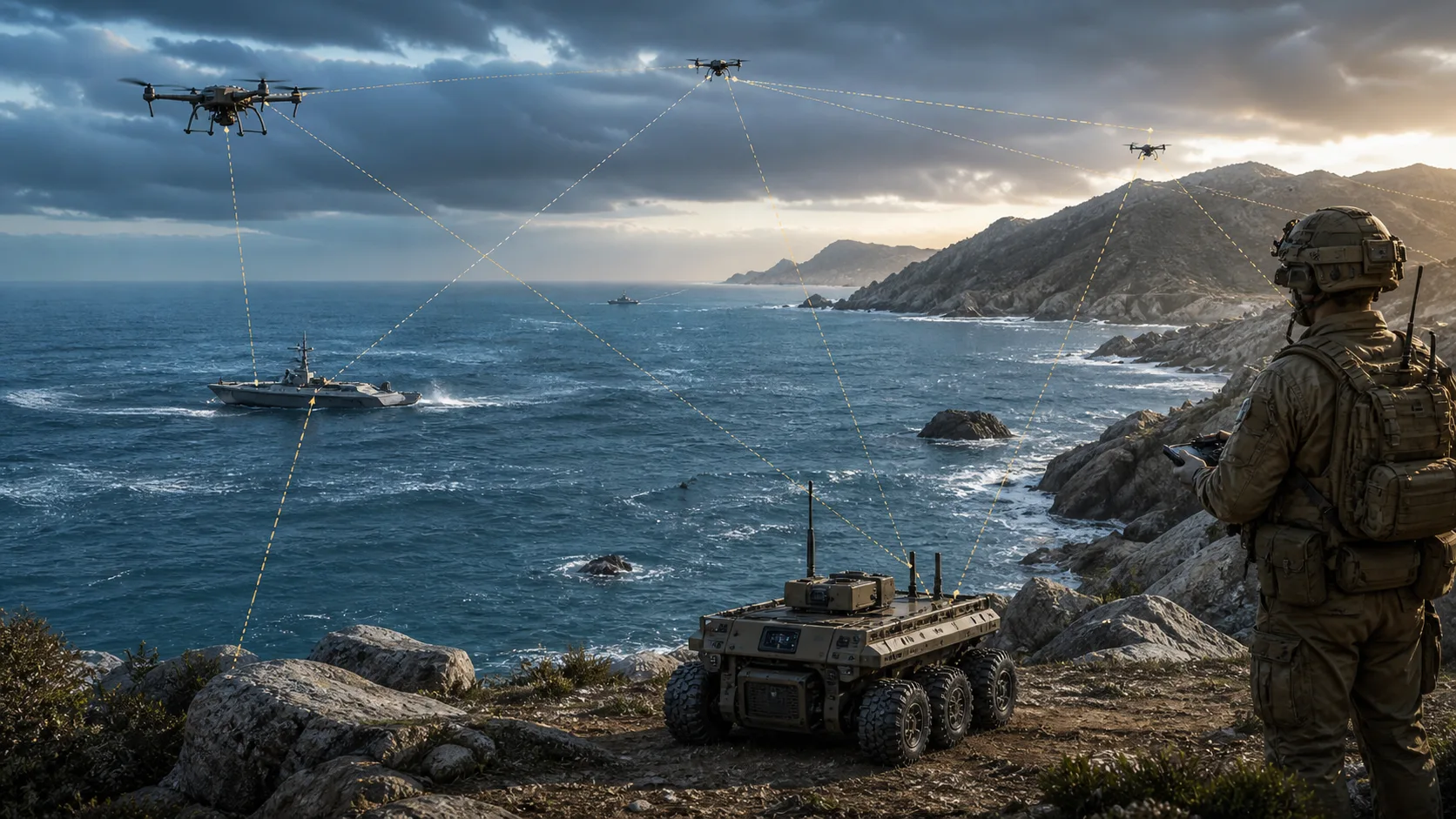
Autonomous capability is often discussed as a property of a vehicle. Operational value, however, emerges from a larger system: mission intent, sensing, communications, coordination, logistics, human authority, and safe behavior when assumptions fail. The engineering challenge is not simply making a platform move without continuous control. It is enabling a team of systems and people to continue making useful progress under uncertainty.
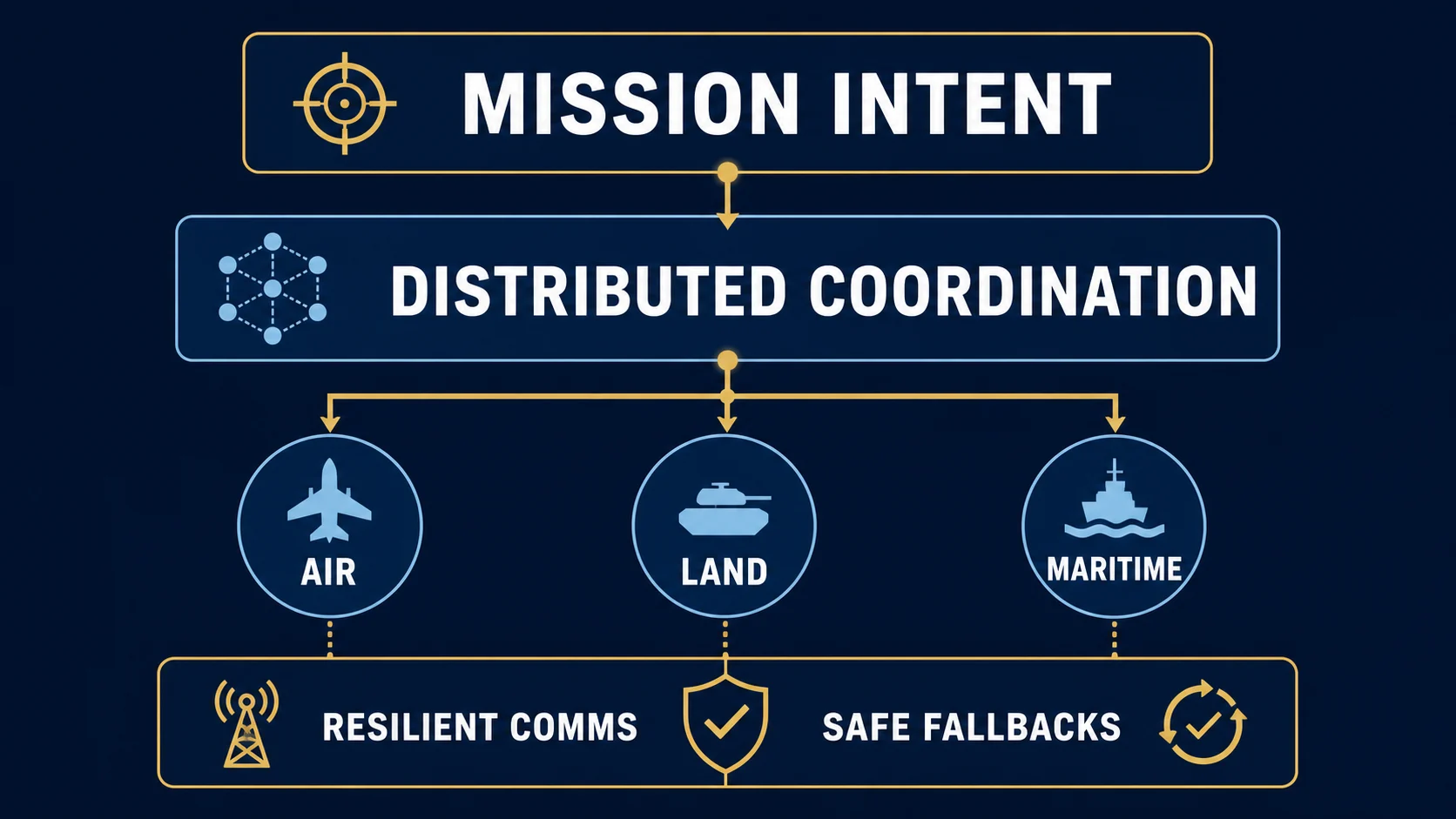
Begin with bounded mission intent
DoD Directive 3000.09 requires autonomous and semi-autonomous weapon systems to support appropriate human judgment, realistic verification, and responsible use. The Department's summary of the directive reinforces performance, reliability, effectiveness, suitability, safety, and law-of-war obligations. These are system-level requirements that should shape autonomy architecture from the outset.
Coordinate without a perfect network
Distributed systems should assume latency, loss, jamming, stale state, and conflicting observations. Replicator 1.2 includes software enablers intended to coordinate many uncrewed assets and remain resilient against countermeasures. The official announcement shows why local decision rules, compact mission updates, and graceful degradation are as important as platform endurance.