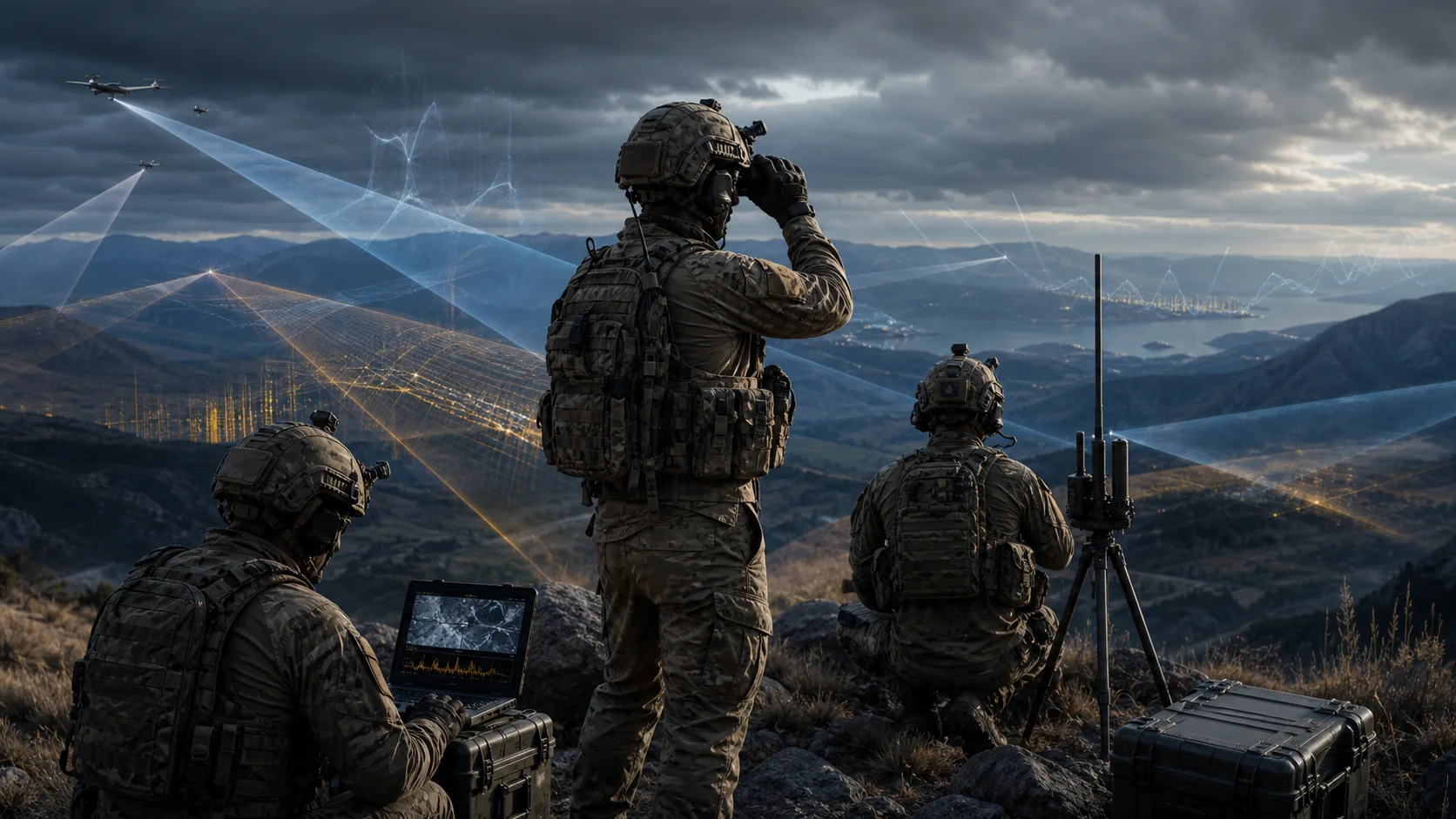
Modern sensing has made concealment a dynamic discipline. Commercial satellites, low-cost drones, passive radio-frequency collection, thermal imagers, network telemetry, and public digital traces can be combined to reveal patterns that no single sensor could confirm alone. Signature management is therefore not a camouflage task. It is the continuous practice of understanding what an observer can detect, infer, and target.
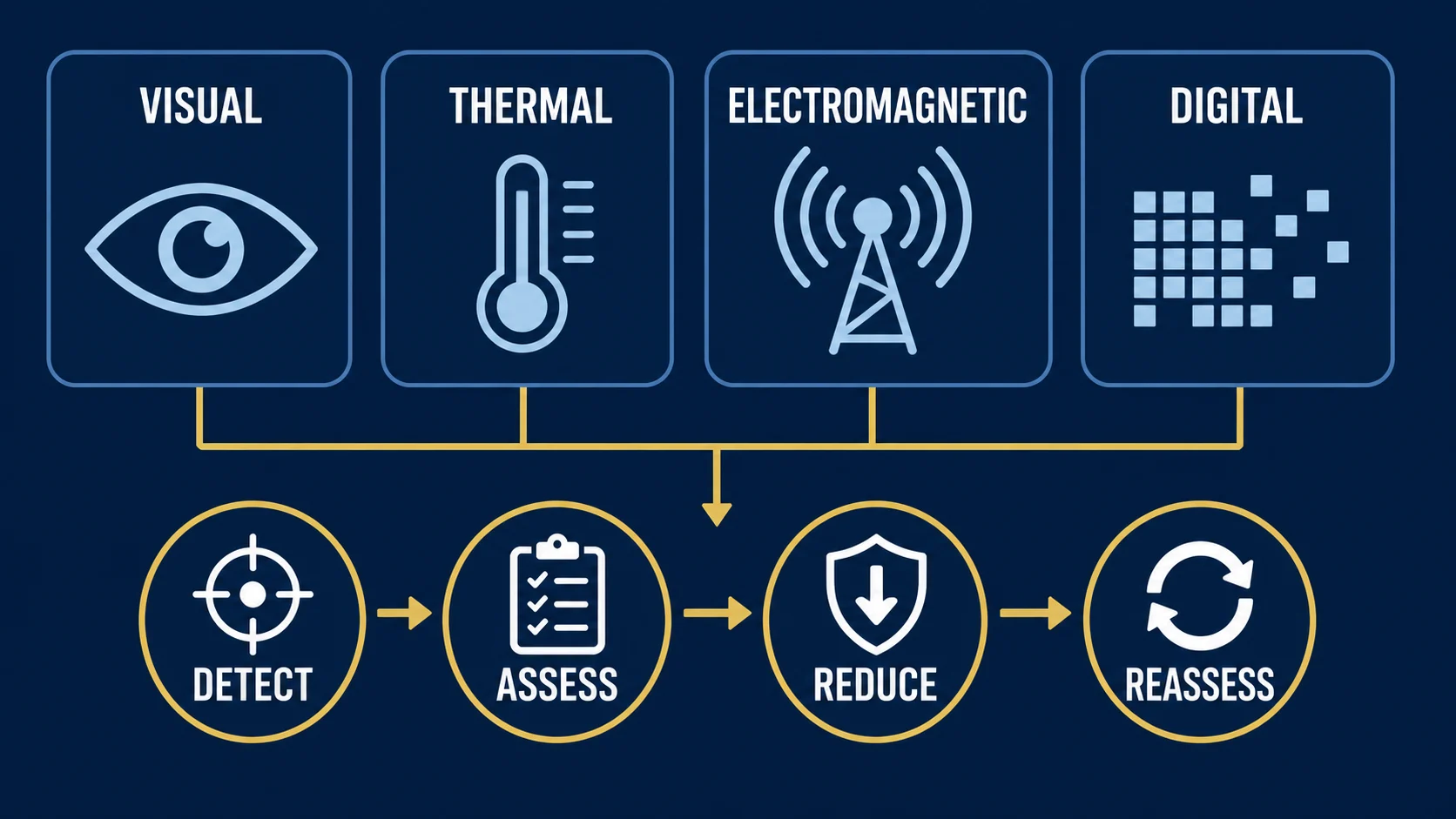
Think in signatures, not objects
An object becomes operationally meaningful through patterns: location, movement, emissions, heat, timing, association, and behavior. A visually concealed position may still be exposed by an unusual thermal profile or a predictable burst of radio traffic. The Marine Corps' Project Dynamis explicitly connects spectrum operations, spoofing, jamming, signature management, resilient data, and robotic-system command and control. That integration reflects the multi-domain character of observability.
Establish a detectable baseline
Teams cannot manage what they have not measured. Baseline work should document normal emissions, thermal cycles, network activity, movement rhythms, and visual changes over time. The Marine Corps' description of the Spectrum Situational Awareness System centers on showing commanders what friendly signatures look like. The principle applies across domains: create a representative picture, then identify which anomalies matter.
Connect reduction to mission purpose
The goal is rarely to become invisible. It is to remain below an advers… [truncated for model]