
High-consequence AI systems need more than an ethics statement. They require a repeatable assurance process that starts before a model is selected and continues after deployment. The central question is not whether an algorithm is broadly “good.” It is whether a specific human–machine system performs a defined mission reliably, lawfully, securely, and understandably under the conditions where it will actually be used.
Start with mission and authority
The DoD AI Adoption Strategy ties AI to battlespace awareness, adaptive planning, resilient sustainment, and enterprise outcomes. Each use case should identify the decision being supported, the authority responsible for it, the evidence required, and the consequences of error. Without those boundaries, evaluation metrics can reward technical performance while ignoring mission risk.
Operationalize risk management
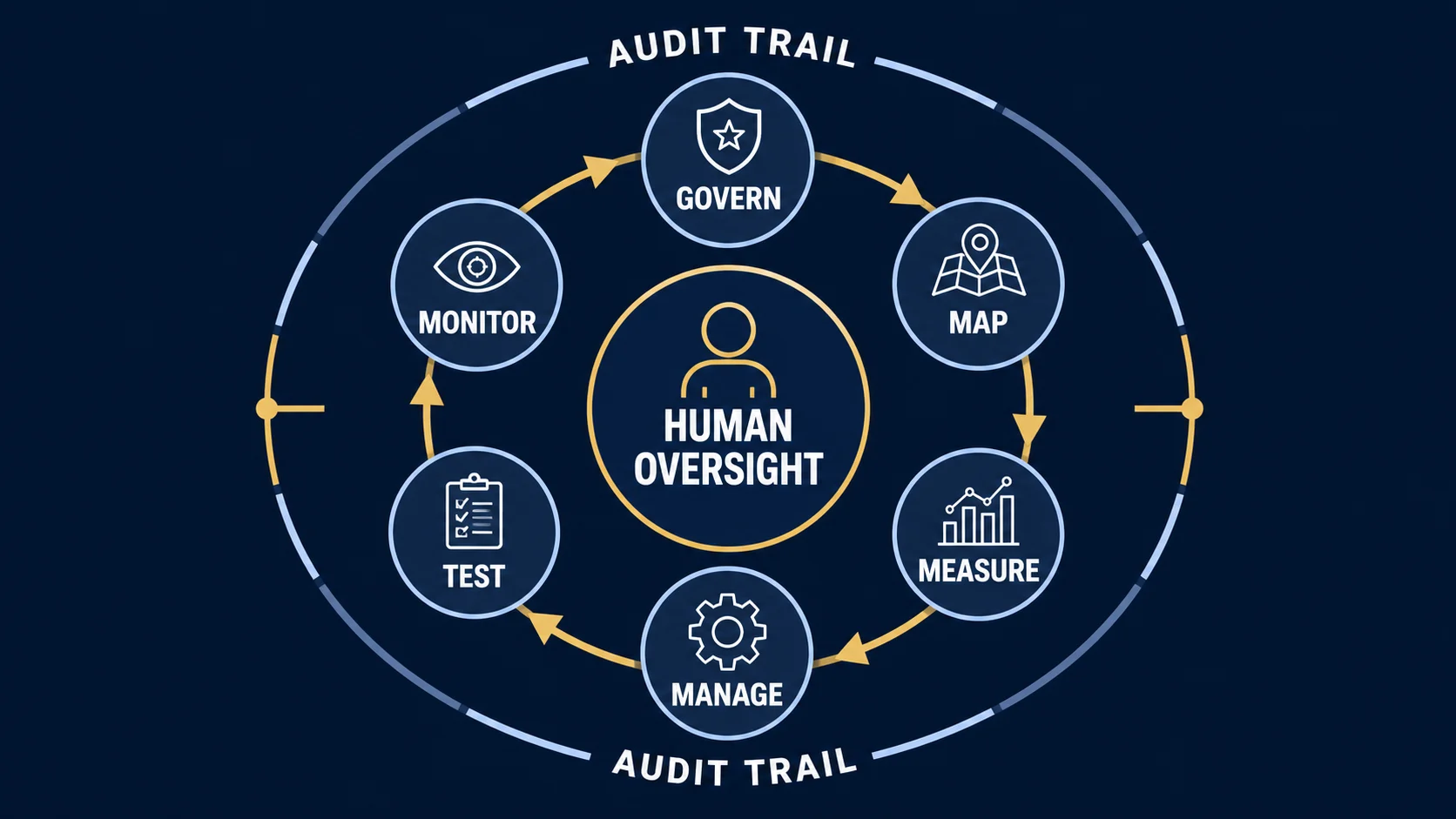
The NIST AI Risk Management Framework provides a practical structure through govern, map, measure, and manage. Governance establishes roles and accountability. Mapping defines context and affected parties. Measurement tests performance and trustworthiness. Management prioritizes and treats risk. In defense environments, these activities should be connected to test plans, configuration control, operator training, cybersecurity, and incident response.
Test the team, not only the model
A highly accurate model can still produce poor outcomes if ope… [truncated for model]