
Information attacks exploit the time between uncertainty and understanding. During that interval, emotionally charged claims can travel faster than verification, institutions may contradict one another, and ordinary audiences can become unwilling participants in an adversary's campaign. Cognitive security begins by reducing those exploitable gaps before pressure arrives.
Protect decision-making, not only content
NATO Allied Command Transformation describes cognitive warfare as activity intended to affect rationality, perception, and decision-making across military and civilian systems. A defensive program should therefore look beyond identifying false posts. It must protect the processes by which leaders and communities establish context, compare evidence, communicate uncertainty, and coordinate action.
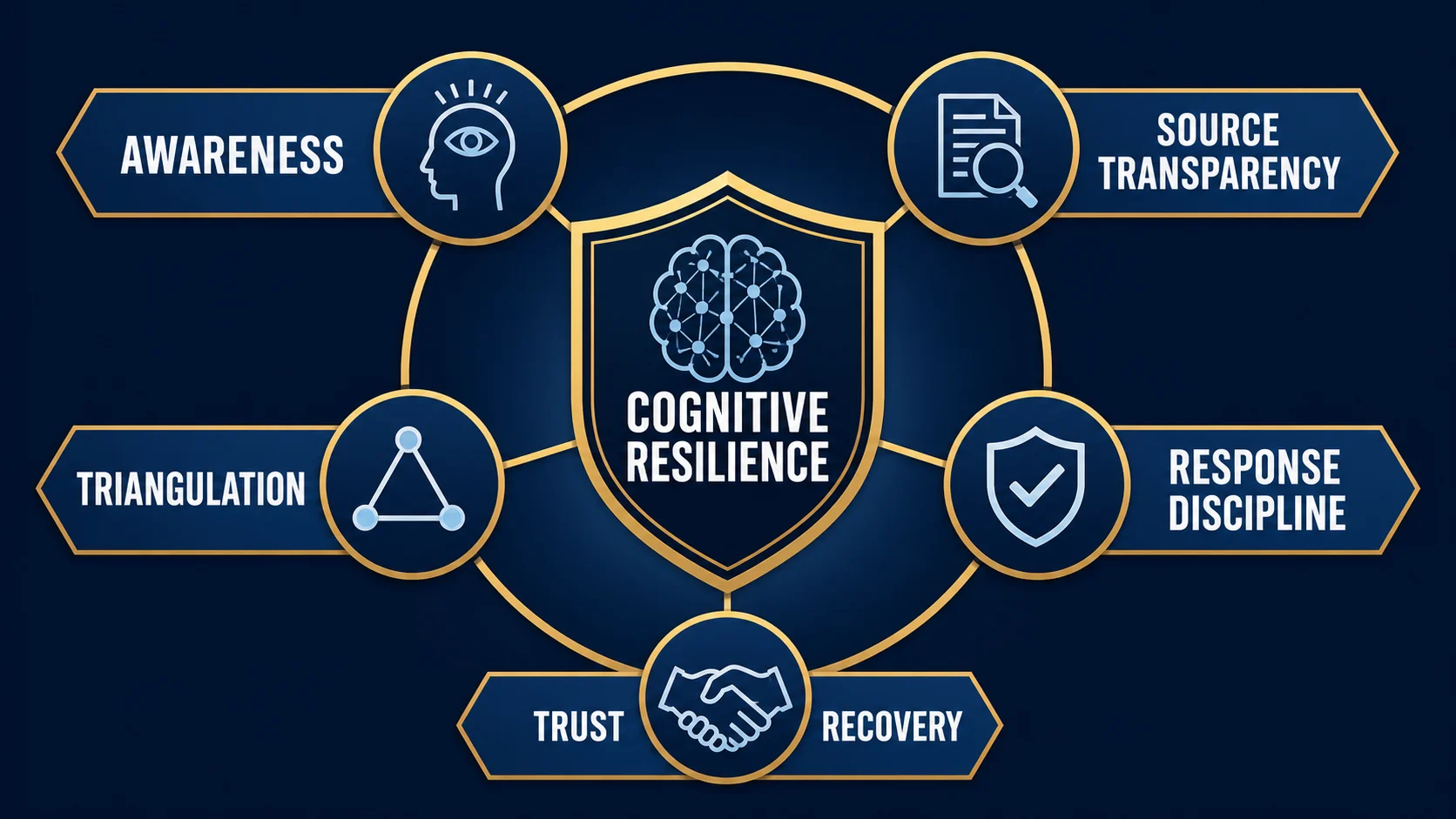
Create awareness without creating panic
The NATO Review's analysis of awareness and resilience notes that truthful but selectively released material can be weaponized alongside fabricated claims. Training should help people recognize manipulation patterns, emotional acceleration, source laundering, and coordinated amplification without teaching them to distrust all information.
Make provenance visible
Source transparency allows analysts and audiences to distinguish direct evidence from interpretation and repetition. The Continue readingRelated intelligence