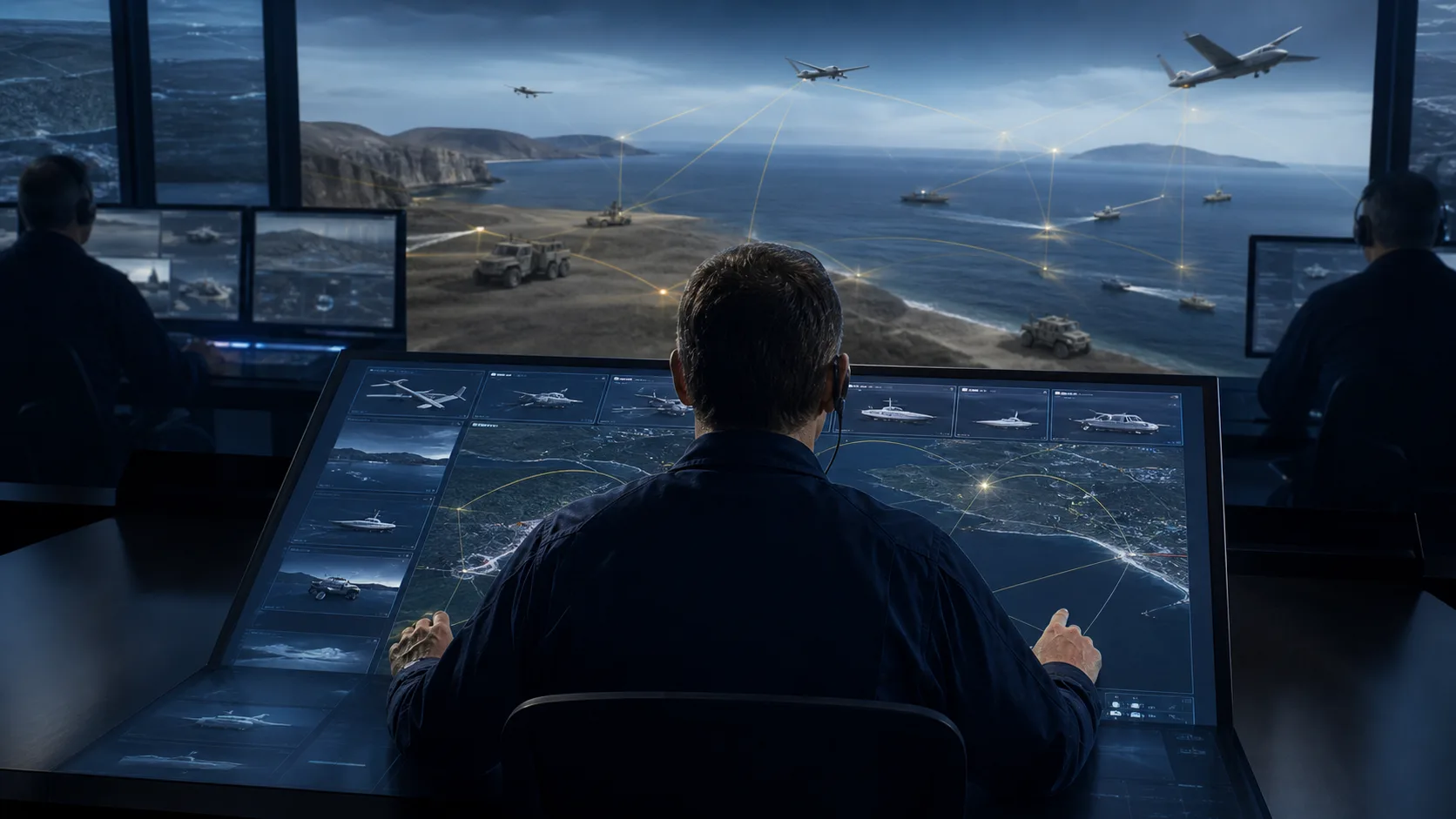
The promise of human–machine teaming is not to remove people from difficult decisions. It is to let machines handle bounded speed, scale, and repetition while people retain context, responsibility, creativity, and judgment. Achieving that complementarity requires more than adding an AI recommendation to an existing interface. The team itself must be designed.
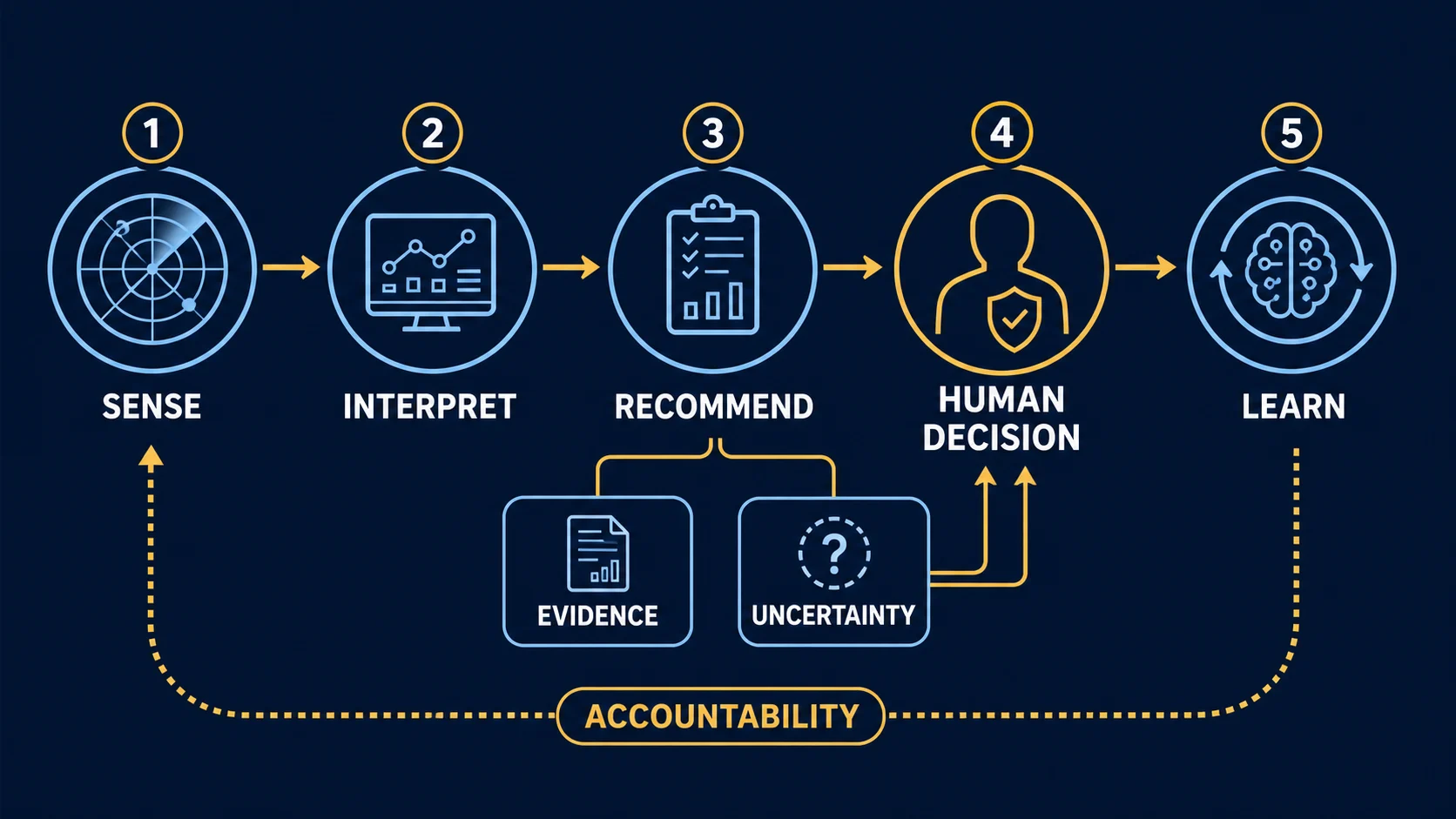
Allocate work around comparative strengths
DARPA's Air Combat Evolution program used a hierarchical model in which autonomy performs bounded tactical behaviors while the human shifts toward mission command. That pattern is broadly useful: machines can monitor, compare, simulate, and surface anomalies; people can interpret intent, weigh consequences, reconcile values, and adapt the mission.
Make trust observable and calibrated
Trust should match demonstrated capability. Too little trust wastes useful automation; too much trust creates brittle dependence. ACE treated trust as something to measure and calibrate through increasingly realistic experiments. DARPA's later Artificial Intelligence Reinforcements program extends human feedback and distributed autonomy into more uncertain multi-agent missions, reinforcing the need for evidence-based confidence.
Show evidence, uncertainty, and alternatives
A recommendation should reveal the information that supports it, the assumptions it depends on, the uncertainty around it, and what alternatives were considered. The Continue readingRelated intelligence